
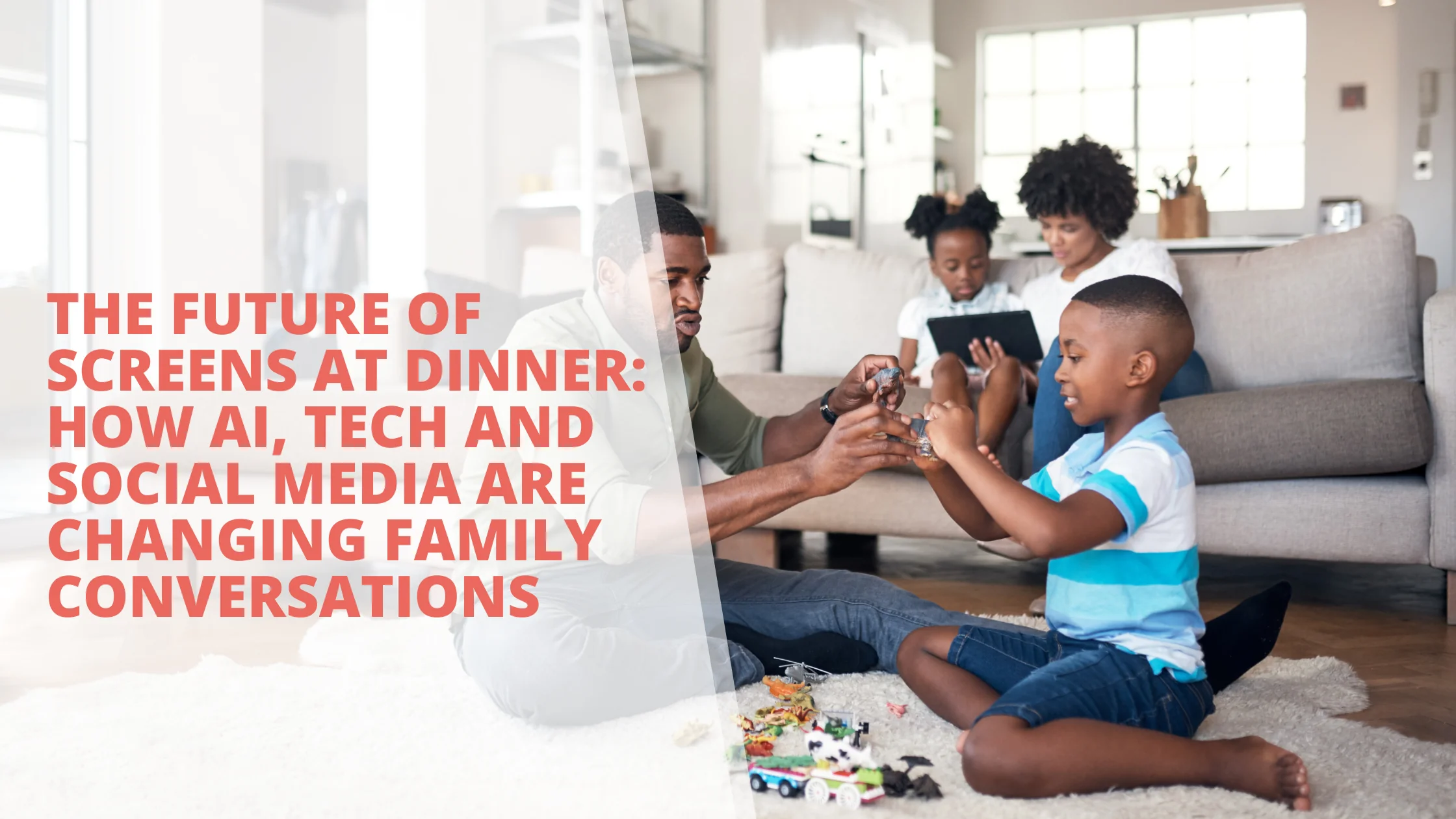
Ten years ago, a dinner table might have held a few plates, cutlery, and a salt shaker. Today, it often holds a few phones too. Screens have quietly become the extra guests at dinner, pulling our attention away from one another and into a world that never stops asking for it.
In many homes, this is not intentional. Parents are answering work messages, children are finishing homework online, and someone might be showing a funny video or sharing a meme. Technology can make us laugh, inform us, and even connect us. But it can also slowly erode the quiet moments that families once relied on to truly see and hear one another.
“Screens have quietly become the extra guests at dinner, pulling our attention away from one another and into a world that never stops asking for it.”
The Attention Economy at the Table
Every app, platform and notification is designed to capture attention. That is the business model of the digital world. The more attention we give to our screens, the less attention we have left for one another.
When this dynamic plays out at the dinner table, the results are subtle but powerful. Conversations become shorter. Eye contact fades. Children may stop sharing, not because they have nothing to say, but because they sense that the family’s attention is divided.
Research from the American Psychological Association and Australia’s eSafety Commission shows that constant digital interruption reduces emotional attunement between parents and children. In other words, when we look at our screens more than we look at each other, children feel less seen.
How AI and Tech Are Changing Family Life
The rise of artificial intelligence, smart speakers, and algorithm-driven apps has shifted how families experience conversation. AI can now suggest dinner recipes, play music, or even generate prompts for family discussions. These tools can be useful, but they cannot replace human connection.
When families outsource conversation to a device, they risk losing the nuance that only comes from listening with empathy. Real connection is messy, unpredictable and deeply human. Technology can assist, but it should not lead.
Children growing up in this era will need parents who model intentional digital habits, who show that technology is a tool, not a companion. The dinner table is one of the best places to start.
Reclaiming the Table
You do not need to ban devices forever. Instead, try creating simple, consistent rituals that remind everyone the table is a space for people, not pixels.
Try this:
- Make dinner a “screen pause zone”: phones in a basket, music low, TV off.
- Ask one question that invites reflection, not reaction.
- Use conversation starters from The Table Talk Project to help everyone reconnect without feeling awkward.
Even fifteen minutes of undivided attention can reset the tone for the evening and remind each family member they matter more than a notification.
Teaching Children Digital Balance
Children learn digital habits from what they see, not what they are told. When parents use their phones at the table, children interpret that as normal. When parents prioritise conversation, they learn that relationships deserve focus.
This is not about guilt. It is about awareness. The world is not slowing down, but our homes can be places that do.
Technology will continue to evolve, but the need for connection will not. Families who learn to blend the two thoughtfully will give their children a lifelong model of balance.
This Week’s Table Talk
At your next dinner, try this question:
“If our phones could talk, what do you think they would say about us?”
It is a simple, light-hearted way to begin a deeper conversation about habits, attention, and what really matters.
“Technology will continue to evolve, but the need for connection will not.”
Get your free Conversation Starters today.
