
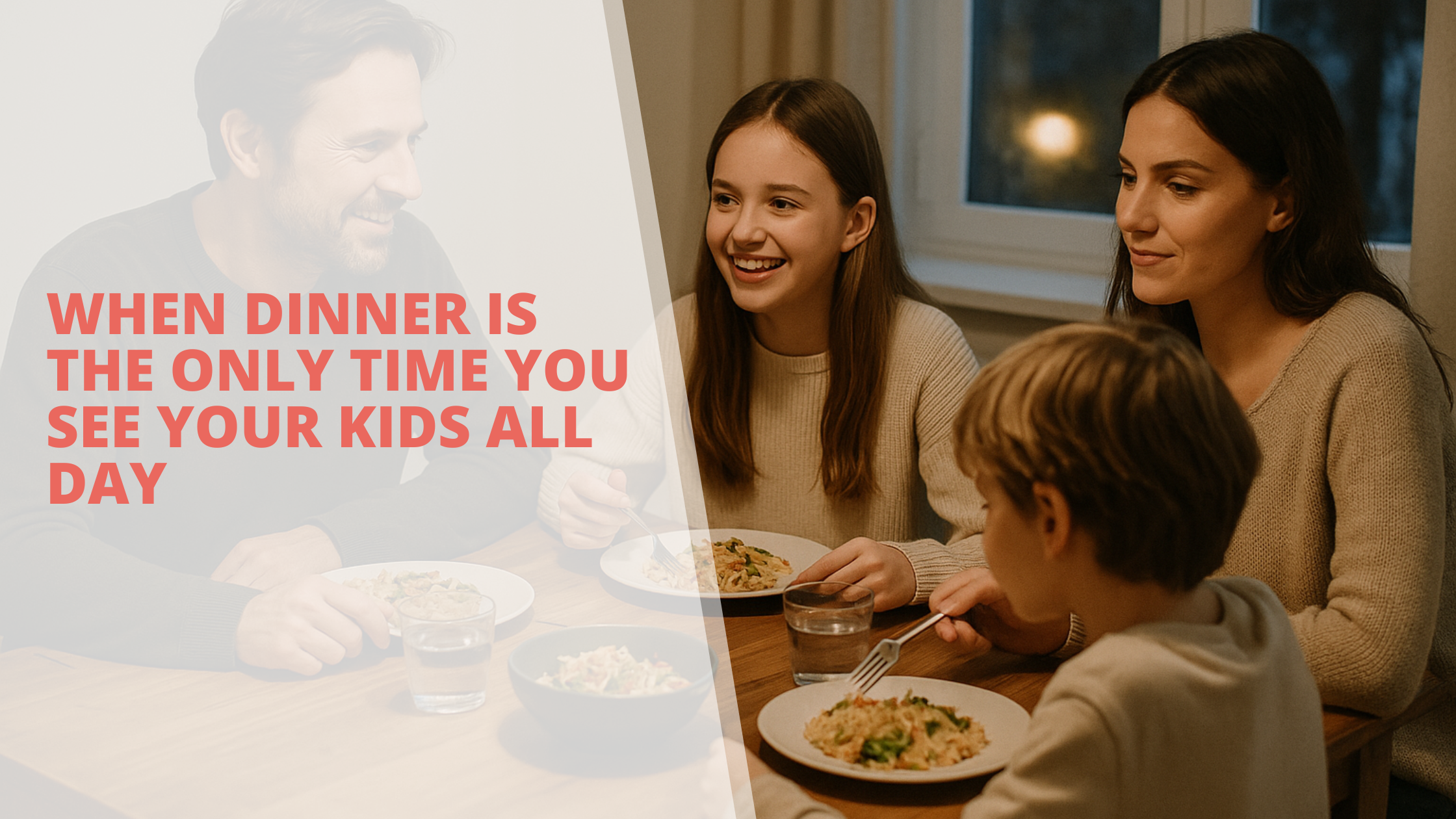
For many families, dinner is the one part of the day when everyone finally lands in the same place. After work, school, sport, and the endless chaos of life, you might have twenty minutes together before someone disappears to finish homework or scroll their phone. It can feel like that time slips away before you have even caught up.
But those 20 minutes still matter. Research shows that the quality of time we share is far more important than the quantity. A single meal shared with presence, curiosity and laughter can strengthen a child’s sense of belonging and help them feel seen and heard.
Focus on Presence, Not Perfection
When time is short, it is tempting to multitask by checking emails, tidying up, or thinking ahead to tomorrow’s to-do list. But children can tell when we are half there. The goal is not a long dinner or deep conversation. It is a moment of full attention.
Try this: put the phone on silent, switch off the TV, and say,
“I’ve been looking forward to this all day. I just want to hear how your day’s been.”
That single sentence tells your child they matter.
Ask the Kind of Questions That Open Doors
When time is tight, small talk often fills the space: “How was school? Did you eat lunch?”
Open-ended questions, however, create connection. They do not need long answers, just emotional honesty.
You might try:
- “What made you smile today?”
- “Was there a moment that felt tricky?”
- “What’s something you’re proud of from today?”
If you use The Table Talk Project conversation starters, let your children choose the question for the night. Giving them ownership makes it feel less like an interview and more like a shared experience.
Make It About Emotion, Not Evaluation
Many families fall into the trap of using dinner as a report card, checking on behaviour, grades, or chores. But that turns dinner into something children want to escape.
Instead, focus on connection over correction. The dinner table is not about performance. It is about belonging.
Try noticing instead of judging.
Instead of “Why didn’t you finish your homework?”
Try “You looked tired tonight. Is something on your mind?”
The first invites defence. The second invites honesty.
Create Rituals That Anchor the Day
Rituals tell children that this is our time, and it matters.
It does not have to be elaborate. It could be lighting a candle, saying one thing you are grateful for, or everyone sharing a highlight from their day.
Consistency builds emotional safety. Even if the meal is short, the predictability says, you can count on this time together.
It’s Not About the Food
Some nights it is a home-cooked meal; other nights, it is toast or takeaway on the couch.
That is okay. What matters most is that the table, whatever it looks like, becomes a place where everyone feels heard.
“Connection does not need hours. It just needs your presence.”
The Research Backs It Up
Studies from Harvard Medical School through the Family Dinner Project show that children who regularly share family meals experience better mental health, improved communication skills, and stronger relationships with their parents. Even just three shared meals a week can have measurable benefits.
It is not about the perfect setting. It is about the consistent message: you belong here. You matter.
This Week’s Table Talk
At your next dinner, try this conversation starter:
“What was one small thing that made you feel good today?”
It is simple, but it opens the door to gratitude and emotional awareness, the kind of connection that lingers long after the plates are cleared.
