Let’s Have the Talk
If you’re old enough to remember Salt-N-Pepa, chances are you can still sing the chorus.
“Let’s talk about sex, baby…”
It’s catchy. It’s memorable. But when the topic comes up around your own dinner table, it suddenly doesn’t feel like a song anymore.
It feels awkward.
You wonder if you’ve left it too late.
Or maybe too early.
You question whether school will cover everything your child needs to know.
And if you’re honest, you might be hoping they’ll never ask.
But here’s what I’ve learnt as both a dad and someone who has spent years working with children and families:
If we don’t talk to our children about sex, someone else will.
The internet will.
Their friends will.
Pornography will.
The question isn’t whether they’ll learn about sex.
It’s who they’ll learn it from.
I Never Had “The Talk”
Growing up in the 1980s and 90s, sex simply wasn’t discussed in our home.
Not once.
My parents never sat me down.
I never asked questions.
There wasn’t a conversation about relationships, consent, respect or intimacy.
It just… wasn’t something families talked about.
Looking back, I don’t blame my parents.
Perhaps that’s how they were raised.
Maybe they felt uncomfortable.
Maybe nobody had modelled it for them either.
But when I became a parent, I knew I wanted something different.
We Decided to Have the Conversation
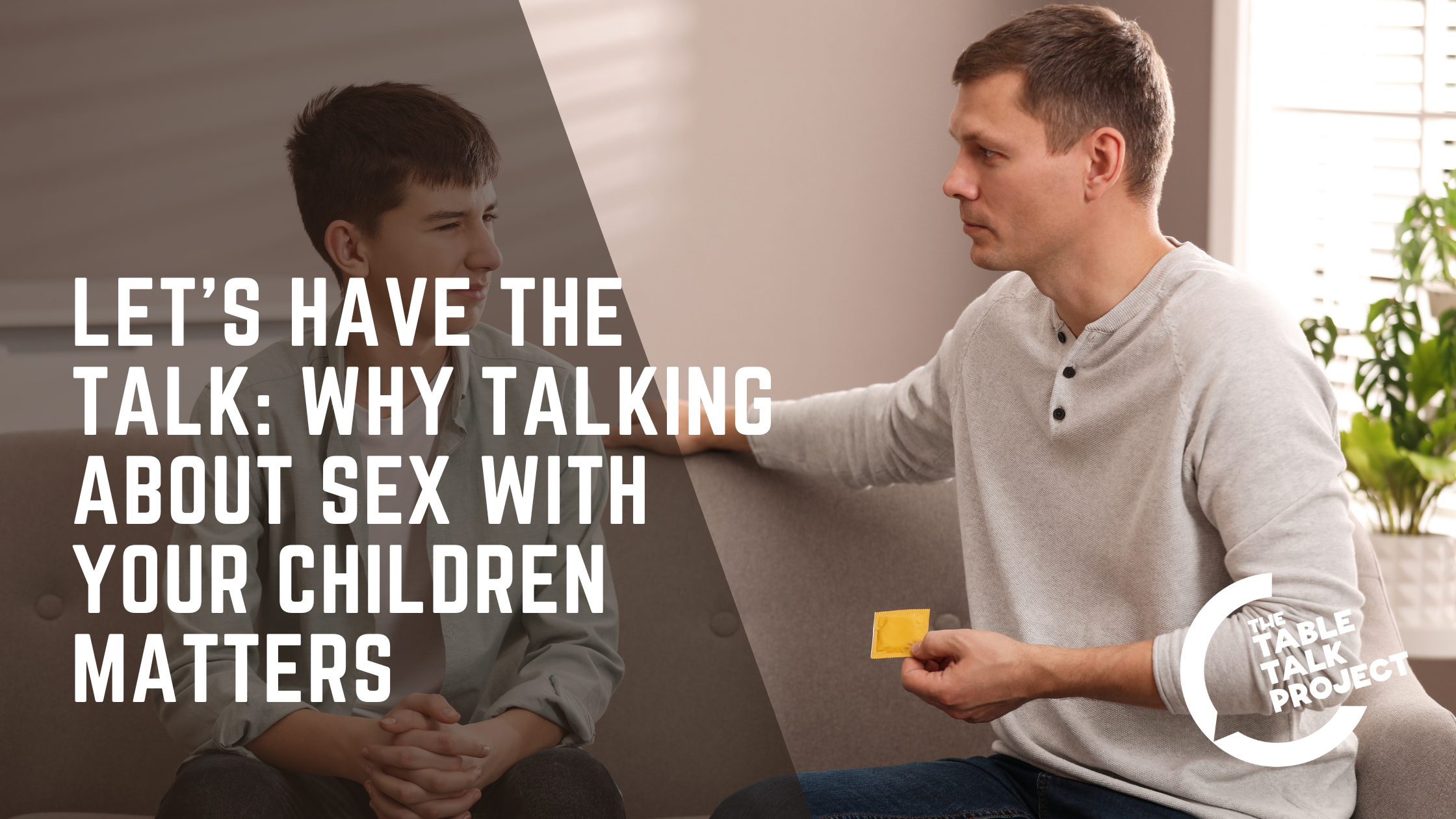
When my children reached their early teenage years, we intentionally had “the talk.”
Actually, that’s probably the wrong way to describe it.
Because it wasn’t a talk.
It was the beginning of many conversations.
We spoke about:
- Sex
- Consent
- Respect
- Healthy relationships
- Emotional intimacy
- Pleasure
- Boundaries
- Communication
- The responsibilities that come with intimacy
There were questions.
Some awkward moments.
Some laughter.
Some moments where I wasn’t sure I’d answered perfectly.
But afterwards I walked away with two emotions.
I felt incredibly grateful that we’d had the conversation.
And I felt genuinely sad that I’d never experienced that kind of openness with my own parents.
School Plays an Important Role… But It Isn’t the Whole Story
Schools do an important job teaching sex education.
They provide information.
They explain biology.
They discuss safety.
But parents offer something schools never can.
Relationship.
Context.
Values.
Trust.
Children don’t just need facts.
They need safe adults they can come back to with the difficult questions.
The embarrassing questions.
The questions that don’t fit neatly into a classroom lesson.
Don’t Forget the Pornography Conversation
One conversation we chose to have even earlier was about pornography.
We spoke about it in the final year of primary school.
Not because we expected our children to go looking for it.
Because statistically, many children are exposed to pornography far earlier than most parents realise.
We wanted them to hear about it from us before they encountered it somewhere else.
Not through fear.
Not through shame.
But through honesty.
We wanted them to understand that pornography isn’t designed to teach healthy relationships, respect or intimacy.
It’s entertainment created for adults, and it often presents unrealistic and unhealthy messages about sex and relationships.
Having this conversation early gave our children language, confidence and permission to come and talk with us if they ever came across something confusing or upsetting.
The Best Part Came Years Later
Fast forward a few years.
Some of our children are now in long-term relationships.
And something unexpected happened.
They’re still talking to us.
Except now…
They’re the ones starting the conversation.
Sometimes it begins around the dinner table.
Sometimes while we’re sharing pizza during one of our Table Talk Project conversation nights.
Sometimes it’s just one question that turns into an hour-long discussion about relationships, communication or intimacy.
Occasionally the conversation becomes one my wife quietly decides to leave to me and the boys.
Fair enough.
But every time it happens, I’m reminded of something important.
The goal was never simply to have “the talk.”
The goal was to create a home where talking was normal.
One Conversation Opens the Door to Hundreds More
Many parents think they need to deliver one perfect speech.
You don’t.
Children rarely remember one conversation.
They remember hundreds of small ones.
The five-minute chats in the car.
The questions after watching a movie.
The discussion after hearing something at school.
The conversations over dinner.
The moments when they realise,
“I can ask Mum or Dad anything.”
That’s the real goal.
Not perfection.
Connection.
Four Tips for Talking About Sex With Your Children
- Start earlier than you think. Age-appropriate conversations can begin long before puberty.
- Keep talking. Sex, relationships and consent aren’t one-off topics.
- Stay calm when questions come. Your reaction teaches them whether it’s safe to ask another question.
- Listen more than you speak. Sometimes your child doesn’t need a lecture. They need a meaningful conversation which means that they need someone who will simply listen without judgement.
Around the Table Tonight
Here’s a conversation starter you might like to try if your children are teenagers.
“Who taught you the most about relationships growing up, and what do you think they got right?”
You might be surprised where the conversation leads.
Final Thoughts
If your children are still little, you may not need this conversation today.
But one day you will.
When that time comes, I hope you remember this.
Talking about sex isn’t about taking away innocence.
It’s about building trust.
It’s about helping your children understand respect, consent, healthy relationships and their own worth.
Most of all, it’s about making sure that when life gets confusing, they know exactly who they can come and talk to.
Because long after they’ve forgotten the facts, they’ll remember this:
Home was always a safe place to ask the hard questions.
Around the Table Conversation Starter
What qualities make someone feel emotionally and physically safe in a relationship?
Listen without rushing to answer. Often the richest conversations begin with curiosity rather than advice.
If you want to read more about having these conversations and other helpful tools read our parenting blog.
Grab our FREE parenting guide here.
