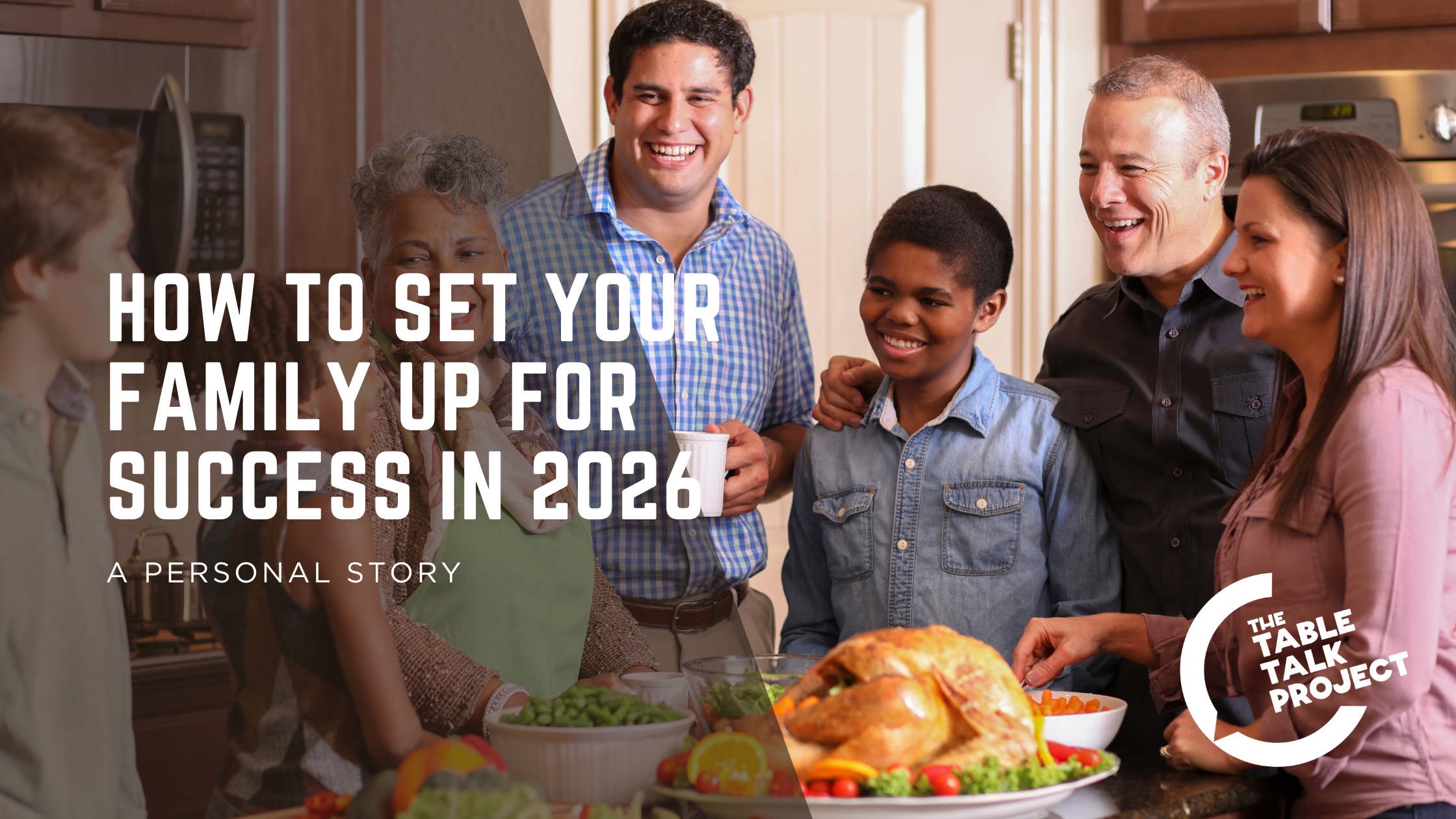
As 2026 rolled over it marked a new day, a new year and new opportunities. There will be things we cannot control but what we can control is what we do with our family and what a successful year would look like for our family.
Maybe you are reading this and thinking about the holidays you are going to have, the new family car or the new job you are taking that provides heaps of money. These are certainly one type of success but the success I am talking about is the success of, at the end of 2026 you look back and ask: how did we grow closer as a family? What did we do together that made real memories? What routines did we have that provided space for everyone to have a voice? And did our children feel a little more loved? These are the successes that we are looking forward to for our family.
The kind of success you cannot buy
Here is what I have learned, often the hard way.
Families rarely drift closer by accident. Closeness is built. Not with grand gestures, but with repeated moments that quietly say: you matter here. You are safe here. You have a voice here.
And if I am honest, that last one is personal.
When I was a kid, I did not feel like I had much of a voice at the dinner table. I could sit there with thoughts, feelings, stories, worries, and it felt like they did not really have a place to land. I learned to keep things light. Keep things short. Keep things to myself.
That is one of the reasons The Table Talk Project exists. Not because every family has the same story, but because every child deserves the chance to be heard in their own home. Every partner deserves to feel known. Every family deserves a rhythm that makes room for real connection.
So when I think about “success” in 2026, I am not chasing a perfect family. I am chasing a present family.
A family where we look up from our lives long enough to notice each other.
Start with one simple decision
If you want a connected year, start with this decision:
We will build our year around connection, not just logistics.
Most families run on logistics. Pick ups. Drop offs. Work schedules. Sport. Homework. Screens. Bedtimes. Groceries. Bills.
None of that is wrong. It is real life.
But when a family only runs on logistics, conversations shrink to management. Then the deeper stuff comes out sideways, or not at all.
Connection does not need a massive plan. It needs a small rhythm that happens often enough to become normal.
The 2026 Family Rhythm Plan
Here are four rhythms that have made the biggest difference for families we have worked with, and they are simple enough to start this week.
1. Choose one anchor meal each week
Not every night. Just one to start.
Pick the meal you can protect. For some families it is Sunday dinner. For others it is a midweek breakfast. For others it is takeaway night at the table.
The goal is not gourmet. The goal is together.
Make it easy:
- Keep it short, even 20 minutes counts
- Put phones away, including adults
- Light a candle, play a song, make it feel like something
2. Make room for every voice
A common pattern in families is that the loudest voice wins, or the busiest voice leads, or the adult voice dominates. It happens without anyone trying.
If you want your children to feel loved, they need to feel heard.
Try a simple rule at your anchor meal:
Everyone gets a turn. No interrupting. No fixing.
That last part matters. So often we rush to correct, advise, teach, or solve. Sometimes what a child needs most is a parent who can simply stay with them.
Try this format:
- One good thing from today
- One hard thing from today
- One thing I need from you this week
3. Create one family tradition for 2026
Traditions are not just cute. They are a form of emotional security. They give your family an identity and a story that your children carry with them.
Pick one tradition and name it.
Examples:
- Friday night “yes night” where one child chooses a simple family activity
- The first Sunday of each month is “reset lunch” where you talk about what is coming
- A yearly “family saying” you choose together and put somewhere visible
- A monthly “walk and talk” where you go for a short walk and each person shares one thing on their mind
The tradition does not have to be big. It just has to be yours.
4. Build a repair rhythm, not a perfection goal
If you are waiting for a calm season to connect, you will be waiting a long time.
Families are made of humans. Humans get tired. Snappy. Withdrawn. Reactive. Defensive.
The secret is not avoiding conflict. The secret is learning how to repair quickly and kindly.
A repair rhythm can be as simple as this:
The next day we come back. We clear the air. We try again.
Try saying:
- I did not handle that well. I am sorry.
- What was that like for you?
- What do you need from me next time?
- Can we reset and start again?
This teaches your children something powerful: love is not the absence of mess, love is what we do after the mess.
A personal promise I am making for 2026
This year, I want to be the kind of dad, husband, and human who slows down enough to listen.
Not half listen while thinking about emails. Not listen while scrolling. Not listen while planning my response.
Listen in a way that says: I am here. You matter. Keep going.
Because if I could go back and give my younger self one gift, it would be a safe place to speak. A table where questions were welcomed. A family rhythm that made room for the real stuff.
I cannot change the past, but I can shape the future. And so can you.
Your family success questions for the year
If you only do one thing after reading this blog, do this:
Tonight or this week, ask one question at the table.
Here are a few to choose from:
- When do you feel most heard in our family, and when do you feel least heard?
- What is one thing you want more of this year as a family?
- What is one thing that has been hard lately that we have not talked about?
- What is one memory you want us to make this year?
- What helps you feel loved by me?
Or you can use our Back at The Table tool.
Then do the hardest part: stay quiet long enough for the real answer.
A gentle next step
If you are not sure where to start, start small.
Pick one anchor meal. Pick one question. Pick one week.
The Table Talk Project exists to help families build meaningful conversations that make home feel safer, warmer, and more connected.
Because everybody deserves a voice at the table.
If you would like help getting started, explore our conversation starters and use the Back at the Table tool to guide your next family meal.
